What the latest research means for patients
Macular degeneration can feel overwhelming.
It’s a condition many people have heard of, but few truly understand until it affects them or someone they love. Macular degeneration affects the ability to see detail, causing distortion, blurring or black/missing patches in the very central vision. This makes activities like reading difficult at first and later can affect many day-to-day activities. Macular degeneration is often still referred to as AMD (Age-related Macular Degeneration) in medical research – it is a complex condition influenced by many factors beyond age alone, and research into its detection and treatment is moving rapidly, with real advances in treatment, detection, and long-term care.
Dry AMD: slowing damage and exploring new frontiers
Dry AMD is the most common form of the condition and, until recently, had very limited treatment options. That picture is beginning to change. New medications aimed at geographic atrophy (GA)—the advanced stage of dry AMD—have been shown to slow the rate of retinal cell loss. While these treatments can’t reverse existing damage, slowing progression may help people maintain useful vision for longer.
Alongside drug development, there is growing interest in photobiomodulation, a non-invasive light-based therapy. This approach uses specific wavelengths of light to stimulate cellular activity in the retina, supporting mitochondrial function and reducing inflammation. Early clinical studies suggest photobiomodulation may help stabilise vision and retinal health in some patients with dry AMD, particularly in the earlier stages. Research is ongoing, but it represents an exciting and patient-friendly area of innovation.
Wet AMD: fewer injections, longer-lasting results
Wet AMD has benefited from effective treatments for many years, mainly through anti-VEGF injections that control abnormal blood vessel growth. Current research is focused on making these treatments last longer, reducing how often patients need injections and clinic visits.
One of the most promising developments is gene therapy, which aims to enable retinal cells to produce their own anti-VEGF effect after a single procedure. If successful, this could transform wet AMD care by offering longer-term stability with fewer interventions.
Earlier detection with OCT scanning
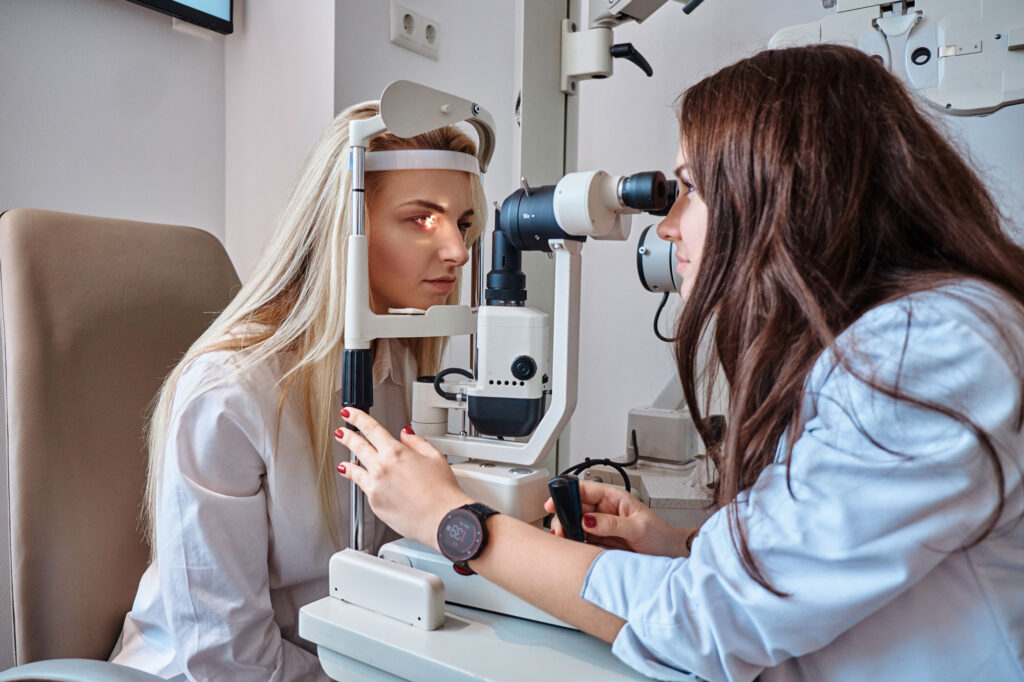
Advances in treatment only work if changes are caught early. That’s why we routinely use OCT (Optical Coherence Tomography) scans to detect even the smallest changes in the macula. OCT allows us to see detailed cross-sectional images of the retina, often identifying fluid, thinning, or early structural changes before symptoms are noticed. This means we can offer advice, monitor AMD closely and act quickly when needed.
Local Research: Gift of Sight
Local to our Hampshire branches and based In Southampton General Hospital (UHS), the charity Gift of Sight plays a truly vital role in supporting eye research. By funding innovative projects and advanced imaging studies, Gift of Sight helps researchers improve early detection, understand disease progression, and develop smarter, more personalised care for people living with AMD. To find out more or donate, go to giftofsight.org.uk
Looking ahead
From light-based therapies and gene treatments to ever-improving imaging technology, the future of macular degeneration care is increasingly hopeful. While there is no single cure yet, research continues to move us closer to earlier diagnosis, better treatments, and more personalised care—helping people protect their sight for as long as possible.
If you’re living with AMD, regular check-ups and OCT monitoring remain one of the most powerful tools we have today, while research continues to shape the treatments of tomorrow. If you have a family history of AMD or are diabetic, make sure you always ask for OCT when you book an eye examination.
If you would like to know more about your own maculae, ask us to show you in detail on your OCT scan when you have your eye examination at Rawlings.
For more information or support see giftofsight.org.uk and maculasociety.org