Suffering from Blocked Ears?
This can be surprisingly uncomfortable and frustrating. Many people describe when their ears feel blocked as a sensation of feeling “underwater,” muffled, pressurised or as though their hearing has suddenly dulled.
At Rawlings Opticians & Hearing Care, we regularly see patients seeking help for blocked ears, reduced hearing and troublesome ear wax. While blocked ears are often caused by a build-up of wax, there are actually several possible causes — and getting the correct diagnosis is important.
What Causes Blocked Ears?
The most common cause of blocked ears is impacted ear wax build up. Ear wax (cerumen) is completely natural and plays an important role in protecting the ear canal from dust, bacteria and irritation. Normally, wax gradually works its way out of the ear naturally.
However, some people naturally produce more wax than others, and wax can sometimes become impacted or compressed within the ear canal.
Blocked ears may also be caused by:
- Eustachian tube dysfunction
- Sinus congestion or colds
- Ear infections
- Allergies
- Changes in air pressure during flying
- Hearing aid use
- Narrow ear canals
- Water trapped in the ear after swimming
Occasionally, symptoms that feel like blocked ears may actually relate to hearing loss rather than wax itself.
Symptoms of Blocked Ears
Symptoms can vary depending on the underlying cause, but commonly include:
- Muffled hearing
- A sensation of fullness or pressure
- Ear discomfort
- Popping or crackling sensations
- Ringing in the ears (tinnitus)
- Dizziness or imbalance
- Difficulty hearing conversations clearly
Some patients notice symptoms develop gradually, while others experience sudden blockage.
Why You Shouldn’t Ignore Persistent Blocked Ears
Although blocked ears are often not serious, persistent symptoms should not simply be ignored or repeatedly self-treated without assessment.
Using cotton buds, hair grips or other objects inside the ear canal can actually push wax deeper and potentially damage the delicate skin of the ear canal or even the eardrum.
Repeatedly using over-the-counter drops without knowing the true cause of the blockage can also delay proper diagnosis and treatment.
A professional ear examination allows the ear canal and eardrum to be properly assessed so the correct blocked ear treatment can be recommended.
Ear Wax Removal and Microsuction
If ear wax is causing the blockage, microsuction is often considered one of the safest and most effective methods of ear wax removal.
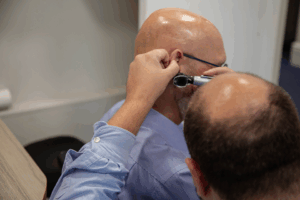 Unlike traditional ear syringing or irrigation, microsuction ear wax removal removes wax using gentle suction rather than flushing the ear canal with water. Some microsuction equipment contains fluid within the collection system for technical or infection-control purposes, and softening drops may also be recommended beforehand, but water is not routinely flushed into the ear during the procedure itself.
Because the clinician can directly visualise the ear canal throughout the procedure, microsuction is often suitable even for patients with previous ear infections, perforated eardrums or hearing aids.
When Should You Seek Professional Advice?
You should consider booking an ear assessment if you are experiencing:
- Ongoing ear blockage
- Clogged ears
- Sudden hearing changes
- Ear pain
- Persistent tinnitus
- Dizziness
- Recurrent wax build-up
- Difficulty hearing with hearing aids
At Rawlings Opticians & Hearing Care, we provide professional ear assessments and modern ear wax removal in a calm and supportive environment.
If you are suffering from blocked ears, seeking the correct diagnosis can often be the first step towards clearer hearing and greater comfort.