Why do we stare more intensely at screens?
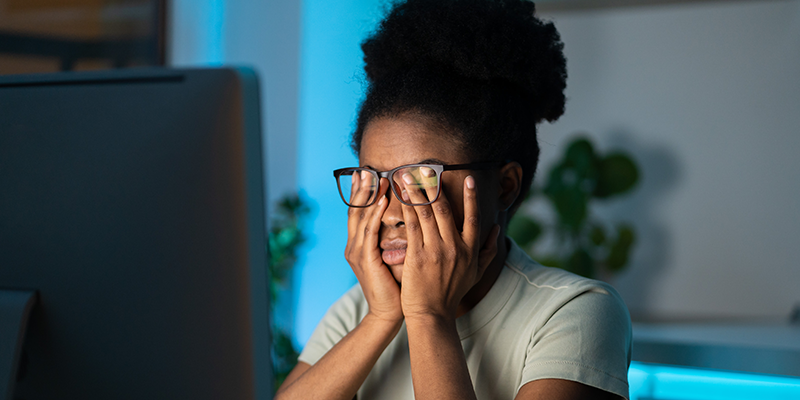
Digital content is demanding. Constant updates, notifications and rapid changes use more mental energy than reading a static page. When we are deeply focused on a task, the brain suppresses natural blinking, probably so that we do not miss something important.
Bright light, small text and high contrast can add to this effect. The harder we concentrate, the less we blink. Even when we do blink, we may not close our eyes fully.
What reduced blinking does to the tear film
A complete blink helps tears spread evenly across the eyes. Without proper blinking, the tears do not spread evenly, allowing the eyes to dry out and become irritated. As irritation makes focusing harder, we may concentrate even more intensely and blink even less.
Eye-strain risk increases significantly after four to five hours of daily screen time. However, risk varies according to the device, the intensity of the task, individual risk and how often proper breaks are taken.
The eye strain index: how devices compare
E-readers and e-ink tablets: low risk
E-readers and e-ink tablets have a paper-like display and no backlight glare. In the leaflet’s comparison, they are the most eye-friendly category and are rated low risk.
Tablets, smartwatches and smartphones: moderate risk
Tablets and smartphones are usually used for shorter periods, and the downward gaze reduces the area of the eye exposed. However, small font and screen glare work against those advantages, giving this category a moderate risk rating. New data shows children are increasingly spending time looking at smartwatches and the risk status may change.
Desktop monitors and laptops: moderate-to-high risk
 Desktop monitors and laptops are often used for long periods and for more demanding tasks. Their higher gaze position leaves more of the eye surface exposed, while screen glare can add further difficulty. This category is rated moderate-to-high risk.
Important!
No device is inherently “bad”. How it is used matters. Duration, task intensity, gaze position, screen glare, personal risk and the frequency of proper breaks all influence the likelihood of symptoms.
What about virtual reality headsets?
Although virtual reality headsets sit very close to the face, research has found that they may help protect the eyes in some ways by surrounding them in a more humid environment.
Task intensity matters too
Complex screen tasks such as writing, gaming or analysing detailed information are associated with much less blinking than simpler activities such as casual reading. In fact, people blink nearly 70% more during relaxed reading than during active writing or working. Mixing lower-demand screen time with more intense tasks may therefore be helpful.
Personal advice from Rawlings
Digital eye strain is not determined by the device alone. An optometrist can consider your vision, eye comfort, working distance, screen position and the demands of your daily tasks. If you are regularly experiencing symptoms, contact your local Rawlings practice for advice or book an appointment.