When we think about digital eye strain, it’s easy to go to a picture of an adult sitting in front of a computer at work all day, not of a child and their screen time. For many children, screens aren’t something they’ll typically sit down and use for a few hours, but something that will follow them throughout the day.
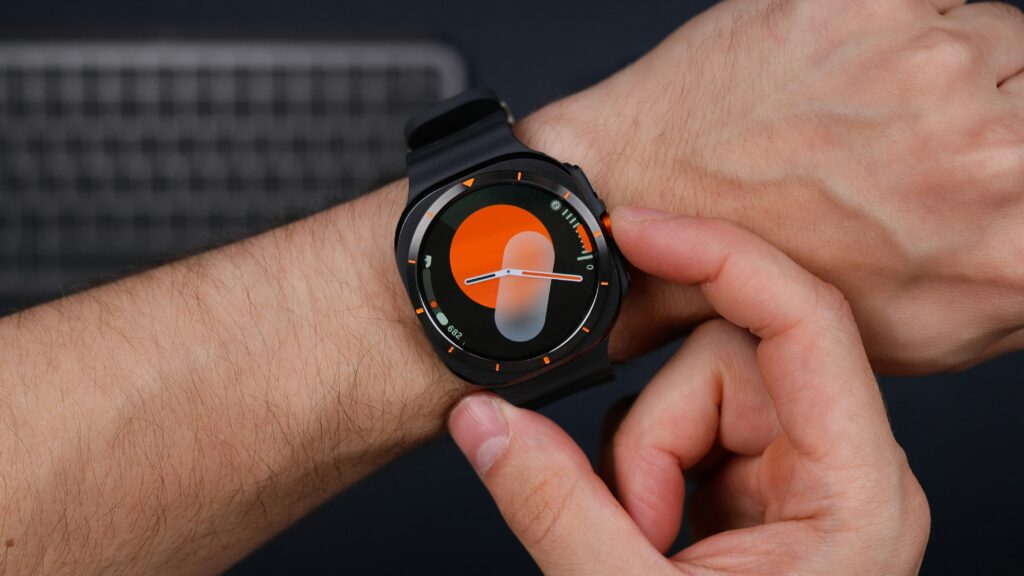
Whether it’s a tablet, or an interactive screen at school, a screen follows them throughout and there’s one screen that rarely gets counted at all, a smart watch. One study recently found that 11% of children use a smart watch.
How much screen time does your child really have?
Parents will usually have a good idea of how long their child spends using a screen for gaming, or a phone, but as this becomes increasingly fragmented, it becomes harder to keep a track of.
Five minutes here. Ten minutes there. Checking a message while doing homework. Looking something up. Watching a short video. Responding to a notification.
This can make it surprisingly difficult to judge how much of their child’s day involves a screen and smartwatches are particularly interesting because screen use becomes something that can happen anywhere and at any time.
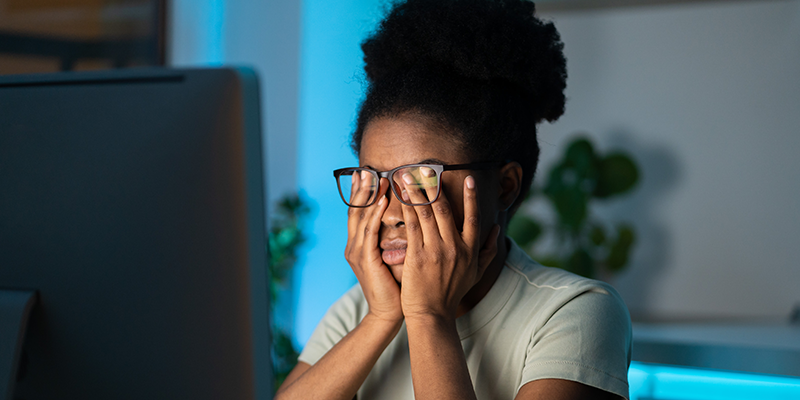
How can a smartwatch affect my child’s eye?
We are now beginning to understand what this change in behaviour could mean for our children’s eyes. A recent study, that followed more than 500 primary school aged children for a year and compared changes in their eyes with the reported use of smartwatches. The children that reportedly used a smartwatch for more than an hour showed more progression towards short sightedness (Myopia), and a greater growth in the length of the eye, when compared with children who reported less smartwatch use.
How is digital eye strain and myopia different?
It’s an important distinction as while they have similar effects, they are quite different in their impact.
Digital eye strain describes the symptoms that can occur after or during prolonged and demanding screen use. While short sightedness (Myopia), is different. It usually develops during childhood and is typically a result of structural or optical changes within the eye.
Myopia, or short-sightedness, is different. It usually develops during childhood and involves structural and optical changes within the eye.
Just because your child might be experiencing digital eye strain doesn’t mean they are on the way to becoming short sighted, or that using a smart watch helps trigger it. What they do have in common is they are intrinsically linked to how children’s visual environments have and are changing.
Which is why the age old question, “how much screen time does my child have”, is becoming less useful. An hour watching TV across the room isn’t the same visual task as an hour concentrating on a small screen close up. At the same time, two hours of homework on a laptop or tablet, followed by messaging friends and gaming may involve more sustained close visual activity than you realise.
Instead of focusing on a daily screen time number, it might be more useful to think about the visual day as whole. Ask how much time they are spending concentrating at close distances and how often do they switch from one near task to another to start off with.
The importance of getting outside
Outdoor time has always been important for your child’s development, and it’s the same when we’re talking about children’s eyes. There’s good evidence that spending more time outside is associated with a reduced risk of your children becoming short sighted.
It provides a natural counterbalance to a day increasingly dominated by close up activities. This doesn’t mean that technology is the enemy, digital devices are an established part of everyday life, even children’s education. The aim you should be going for is balance.
Let us keep an eye on them!
Regular eye exams are an important chance to make sure your child’s eyesight is developing well, and they are seeing clearly and comfortable, as well as identifying any changes and helping to manage them,
Regular eye examinations are an important opportunity to make sure they are seeing clearly and comfortably and to identify changes such as developing or progressing myopia.