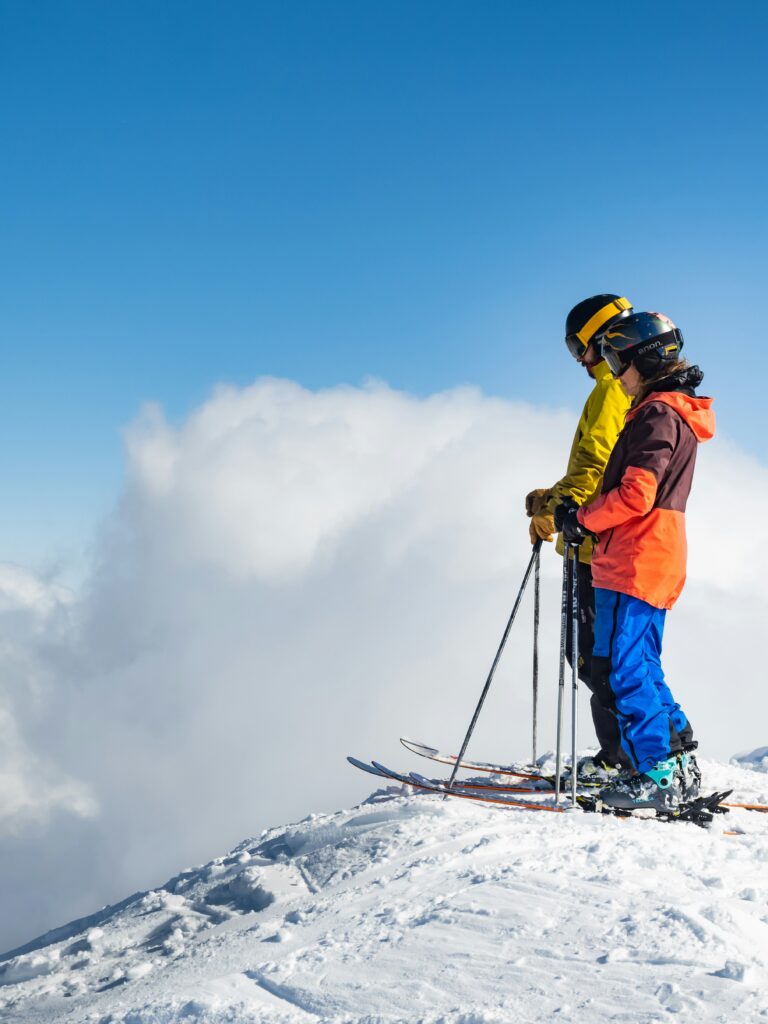
From perfect sunshine on the slopes, to a sudden whiteout, mountain conditions can change in minutes, and your eyewear needs to be able to keep pace.
Our expert Dispensing Opticians will help you choose the right ski goggles and winter sports eyewear to match your prescription, helmet and destination. Thanks for their expert knowledge you’ll find the perfect choice from a range of luxury specialists including Bollé and Maui Jim.
Why is winter sports eyewear important?
As anyone that’s spent time on the slopes knows that snow can be unforgiving. It reflects the sunlight, including the intense ultraviolet rays, back towards the eyes, and altitude, wind and cold increase your exposure. On the other end, cloud, mist and falling snow can create the opposite problem by flattening contrast meaning bumps and changes in terrain are hidden to the naked eye.
Well selected ski and snowboard goggles will help you to manage bright light, improve contrast and help provide protection for your eyes against wind, snow, and ice. A great set of winter sports eyewear will come with full UV protection, which is just as important to protecting your eyesight in the long run as keeping them able to see against the bright light.

How should ski goggles fit?
Ski goggles should provide a secure, comfortable seal without reducing your field of vision or putting to much pressure around your eyes. If you need to wear glasses under them, they need to allow extra space and not put pressure on your frames or your ears!
Goggles also need to work correctly with your helmet. Gaps between the helmet and goggles may expose skin and interfere with airflow, while a frame that is too tight can become painful during a full day on the slopes.
Bring your helmet to Rawlings so the fit can be assessed as a complete system. The goggles should remain secure without pressing uncomfortably against the face or restricting your view.
Which ski goggle lens colour is best?
The right lens will depend on the conditions where you’re planning+- to ski. The wrong colour can still work but you won’t feel the best effects from it.
- Strong alpine sunshine: dark or mirrored lenses can reduce brightness.
- Flat or overcast light: rose, amber and other contrast-enhancing tints may help define changes in terrain.
- Changing conditions: many skiers carry interchangeable lenses for different weather. Photochromic ski goggles are another option, changing tint in response to available light.
Each lens has a particular tint range and response time, so it is important to consider its intended conditions rather than choosing by mirror colour alone.
Prescription ski goggles
People who need vision correction have several options:
- Prescription inserts
- Compatible spectacles
- Directly glazed sports eyewear
Each of the options can affect your goggles ventilation and your peripheral vision differently, and wearing your everyday glasses beneath googles might create pressure around your temples if the fit isn’t quite right, and even increase fogging. With a good fit, any fogging issues will be minimal as long as you don’t let snow get onto the glasses or goggles when putting them on.
Prescription ski goggles or specialist inserts can provide a clearer and more comfortable alternative. Accurate measurements are especially important with curved lenses, stronger prescriptions and wraparound designs.
How to stop ski goggles fogging
Double-lens construction, ventilation and anti-fog treatments can all reduce condensation, but correct care remains essential:
- Avoid wiping the inner lens when it is wet, as this may damage the anti-fog surface.
- Allow goggles to dry fully after use and keep vents clear of snow.
- Do not leave them on a radiator or close to excessive heat.
- At the end of your trip, inspect the foam, strap and lenses before storing them in a protective case.
Why get ski goggles fitted professionally?
Choosing ski goggles online may seem convenient, but fit, peripheral vision and helmet compatibility are hard to judge reliably from a photograph. Professional advice helps ensure that your goggles provide comfortable coverage, an appropriate lens and the clearest possible view of the terrain ahead.